CHOLOCHITRO DIARY

Cholochitro

@cholochitro.official

Curatorial voice of the Cholochitro team, with reflections and lists to get the site started.

Followers

Want a page like this for the films you watch? Start your diary

Reviews
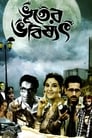
Bhooter Bhabishyat (2012)

Watched 5 Sept 2026

A haunted-house comedy about a dying film industry, told by ghosts of a Kolkata that real estate keeps erasing. It shouldn't work as well as it does. Anik Dutta's satire got embroiled in actual censorship politics on release, which only proved its point faster than the film itself could. It's the rare Tollywood comedy that's genuinely, structurally clever rather than just performed loudly, and it's a reminder that mainstream Bengali cinema and sharp filmmaking were never actually opposites.

The Cloud-Capped Star (1960)

Watched 5 Sept 2026

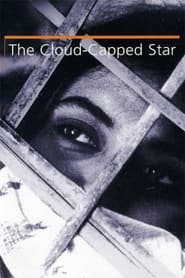
Nita's scream at the end isn't catharsis, it's an accusation: of her family, and by extension of a nation that asked refugees to disappear quietly into rebuilding it. Ghatak shoots Partition trauma the way Ray never would: operatic, melodramatic, unafraid of excess, because restraint would be a kind of lie about what actually happened to people. This is the film that makes you understand why Ghatak and Ray, working the same decade in the same city, aren't really making the same kind of cinema at all.
Charulata (1964)

Watched 5 Sept 2026

Charulata watching Amal through opera glasses, adjusting the focus, is one of the great single shots in Bengali cinema, not because it's technically dazzling, but because it says everything about a marriage without a word of dialogue. Madhabi Mukherjee carries entire scenes on the angle of her wrist. Ray adapted Tagore's Nastanirh knowing the story was small; he made a film about how a room can be a whole world, and how loneliness inside a marriage looks nothing like loneliness alone.

1
Lists

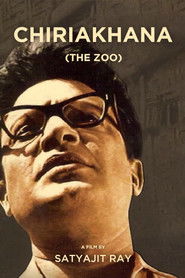
Mahanayak@100182 films · updated 5 Sept 2026Uttam Kumar was born Arun Kumar Chattopadhyay on 3 September 1926, in a house on Ahiritola Street in north Calcutta, and his birth centenary began on 3 September 2026. He died on 24 July 1980, aged fifty-three, a day after collapsing on the set of Ogo Bodhu Shundori. Between those dates he made more than two hundred films and became the closest thing Bengali cinema has to a shared inheritance. He did not arrive as a star. Seven of his films failed in succession, and the industry nicknamed him the Flop Master General before Basu Paribaar (1952) and Sharey Chuattor (1953) turned it around. Both predate Pather Panchali, worth remembering when Bengali cinema's two traditions are told as a sequence rather than as parallel lives. Popular Bengali cinema did not follow the art cinema; they grew up alongside each other. What he actually changed was performance. Bengali screen acting had inherited the high theatricality of the stage, and Uttam Kumar replaced it with something quieter and more ordinary: a naturalism built out of Bengali speech, gesture and register rather than imported from anywhere. The honorific Mahanayak, "great hero", is generally traced to the film magazine Ultorath around the time of Chaowa Pawa (1959). He made thirty films with Suchitra Sen between 1953 and 1975, a pairing that became a genre in itself. He was the first actor ever to receive the National Film Award for Best Actor, taking the category's inaugural award for two 1967 performances at once, in Antony Firingee and Chiriyakhana. And in Nayak (1966), Satyajit Ray wrote a part specifically for him and then used his stardom as the subject, a matinee idol interrogated across a train journey about the distance between the man and the image. It won the Special Jury Award and the Critics' Prize at Berlin. This list gathers every Uttam Kumar film currently in the Cholochitro catalogue, oldest first. It is not a ranking. It is the shape of a career that a city has never quite stopped watching.