People
Directors, actors and the crew behind Bengali films, from Ray and Ghatak to the people working now.
Where to start

Widely considered India's greatest filmmaker. The Apu Trilogy and everything after put Bengali cinema on the world map and remains the benchmark it's measured against.

The most politically urgent of Bengal's great triumvirate, with restless, self-questioning films on middle-class complacency across a 50-year career.

A tortured, uncompromising visionary whose Partition-trauma trilogy is now ranked among the greatest films ever made, despite commercial failure at the time.

"Mahanayak", the single biggest matinee idol Bengali cinema has produced, a romantic lead for nearly three decades.
Subrata Mitra (1930–2001) shot Pather Panchali at twenty-one with no prior camera experience and went on to photograph most of Satyajit Ray’s first decade, including Aparajito, Jalsaghar, Apur Sansar, Charulata and Nayak. On Aparajito he devised the bounce-lighting technique that became his signature: stretching white cloth above the set and firing lamps into it to simulate skylight, a method later adopted worldwide.

Bengali cinema's definitive screen goddess, opposite Uttam Kumar in 30 films, famous too for her reclusive final decades.
Soumendu Roy (1932–2023) began as Subrata Mitra’s assistant and took over as Satyajit Ray’s cinematographer from Teen Kanya (1961) onward, ultimately shooting twenty-two of Ray’s films including Goopy Gyne Bagha Byne, Aranyer Din Ratri and Hirak Rajar Deshe. He won the National Film Award for Best Cinematography three times and also worked extensively with Tapan Sinha and Tarun Majumdar.

Ritwik Ghatak's Nita in Meghe Dhaka Tara remains her defining, most-cited performance.

Ray's most frequent leading man across 14 films: the intellectual, everyman counterpoint to Uttam Kumar's romantic stardom.

One of Bengali cinema's longest-working actresses, debuting in 1951 and still active decades later.

A poet-turned-filmmaker whose surreal, painterly images of rural Bengal made him one of the most internationally decorated directors of the post-Ray generation.
Mahfuzur Rahman Khan (1949–2019) was Bangladesh’s most decorated cinematographer, shooting more than 200 films over four decades and winning the National Film Award for Best Cinematography ten times. He was Humayun Ahmed’s regular director of photography, shooting Srabon Megher Din, Dui Duari, Amar Ache Jol and Ghetuputra Komola.

Kabir Suman, born Suman Chattopadhyay in 1949, transformed Bengali popular song in 1992 with the album Tomake Chai, effectively founding the jibonmukhi gaan movement. He won the National Film Award for Best Music Direction for Srijit Mukherji’s Jaatishwar, a film built around the nineteenth-century Portuguese-Bengali songwriter Antony Firingee; the score drew on period Bengali forms including kobigaan.

Nasiruddin Yousuff (b. 1950) fought in the 1971 Liberation War and co-founded Dhaka Theatre with the playwright Selim Al Deen in 1973, becoming central to Bangladesh’s post-independence theatre movement before turning to film. Guerrilla (2011), adapted from Syed Shamsul Haq’s novel about a woman working in the resistance, won him the National Film Award for Best Director and swept ten categories.

Raisul Islam Asad (b. 1953), a Crack Platoon fighter in the 1971 Liberation War, has been the anchoring presence of Bangladesh’s literary art cinema for five decades. He won the National Film Award for Best Actor four times: for Gautam Ghose’s Padma Nadir Majhi, Anya Jibon, Morshedul Islam’s Dukhai and Tanvir Mokammel’s Lalsalu. He won twice more for supporting work.

Tanvir Mokammel (b. 1955) has built a six-feature, fifteen-documentary body of work around the 1971 Liberation War, Partition displacement and Bengal’s syncretic folk traditions. Chitra Nodir Pare (1999), about a Hindu family deciding whether to leave post-Partition East Bengal, placed third in the British Film Institute’s poll of Bangladeshi cinema. He won the National Film Award for Best Director twice and received the Ekushey Padak in 2017. He directs the Bangladesh Film Institute in Dhaka.

Tareque Masud (1956–2011) was the defining figure of Bangladesh’s independent cinema, working almost entirely outside the Dhaka studio system. He co-directed Muktir Gaan (1995) with Catherine Masud, assembling unused 1971 war footage into a documentary that drew record audiences. His debut feature Matir Moina (2002), drawn from his own madrasa childhood, won the FIPRESCI Prize in the Directors’ Fortnight at Cannes and became Bangladesh’s first Academy Award submission. He died in a road accident in 2011 while scouting locations.

Morshedul Islam (b. 1958) emerged from Bangladesh’s 1980s short-film movement, which built a production and exhibition circuit outside the commercial studios. His short Agami (1984) and the feature Chaka (1993), adapted from Selim Al Deen, established that circuit’s international profile. He also works in children’s cinema, notably Dipu Number Two.

Fazlur Rahman Babu (b. 1960) came from Faridpur’s amateur theatre to become the most decorated supporting actor in Bangladeshi cinema, winning the National Film Award for Best Supporting Actor five times between 2004 and 2021. He is also a recorded folk singer, notably of the song Indur from Monpura.

Led the 1990s-2000s Bengali cinema revival: literary sensibility paired with an increasingly personal, gender-nonconforming voice.

Aniruddha Roy Chowdhury (b. 1964), known in the industry as Tony, moved from advertising into features in 2006. Antaheen took the Golden Lotus for Best Feature Film at the 56th National Film Awards, the national top prize, rarely awarded to a Bengali film. He later directed the Hindi courtroom drama Pink (2016), which won the National Film Award for Best Film on Other Social Issues.

Suman Mukhopadhyay (b. 1966), son of the theatre director Arun Mukhopadhyay, works in theatre and film alike. His debut Herbert (2005), from Nabarun Bhattacharya’s novel, won the National Film Award for Best Feature Film in Bengali. Kangal Malsat (2013) was refused certification by the CBFC and cleared only on appeal; Putulnacher Itikatha screened in Rotterdam’s Big Screen Competition in 2025.

Atanu Ghosh (b. 1969) trained in journalism at the University of Calcutta and worked in documentary and telefilm before his feature debut in 2009. Mayurakshi (2017), starring Soumitra Chatterjee and Prosenjit Chatterjee as a father and son negotiating dementia, won the National Film Award for Best Feature Film in Bengali. Shesh Pata (2023) took Best Direction at both the WBFJA and Filmfare Bangla awards.

Mosharraf Karim (b. 1971) spent sixteen years in Dhaka’s Nattokendro theatre group before television made him a household name and cinema made him a critical one. He won the National Film Award for Best Performance in a Comic Role for Komola Rocket and Best Actor at Portugal’s Avanca Film Festival for Jalal’s Story. He crossed to Indian Bengali cinema in Bratya Basu’s Dictionary.

Suman Ghosh (b. 1972) directs Bengali features while working as a professor of economics at Florida Atlantic University. His debut Podokkhep (2006) earned Soumitra Chatterjee his only Best Actor National Award. Three of his films world-premiered at the Busan International Film Festival, and Shyamal Uncle Turns Off the Lights entered the collection of the Museum of Modern Art. He also directed the Amartya Sen documentary The Argumentative Indian.
Ashish Avikunthak, born Ashish Chadha in Jabalpur in 1972, is an experimental filmmaker and anthropologist who works largely in Bengali and teaches film and media at the University of Rhode Island. Rati Chakravyuh is a single 105-minute take and Kalkimanthankatha transposes Beckett to the 2013 Kumbh Mela. He has shown at Tate Modern and the Centre Pompidou.

Mostofa Sarwar Farooki (b. 1973) is Bangladesh’s most internationally visible contemporary director, associated with the break from Dhallywood melodrama toward vernacular, improvisation-driven realism. Television (2012) closed the Busan International Film Festival and won the Asia Pacific Screen Awards Grand Jury Prize, and three of his features have been Bangladesh’s Academy Award submissions. He cast Irrfan Khan in Doob (2017).

Qaushiq Mukherjee, credited as Q, was born in Kolkata in 1973 and works in Bengali, Hindi and English. His second feature, the black-and-white Gandu (2010), went unreleased in India and became an official selection at the 2011 Berlin International Film Festival. He followed it with the Tagore adaptation Tasher Desh and the horror film Ludo. He belongs on a canonical list for rupture rather than for awards.

Chanchal Chowdhury (b. 1974) came out of Dhaka’s group-theatre and television scene to become the most decorated Bangladeshi screen actor of his generation, winning the National Film Award for Best Actor three times. His audience extends across the border into West Bengal, where he played Mrinal Sen in Srijit Mukherji’s Padatik (2024).

Subhrajit Mitra (b. 1976) is an Indian director and screenwriter in Bengali cinema. Avijatrik (2021) is a black-and-white adaptation of the later portion of Bibhutibhushan Bandyopadhyay’s Aparajito that returns to Satyajit Ray’s character Apu in adulthood; it won the Silver Lotus for Best Feature Film in Bengali, with a second Silver Lotus for its cinematographer Supratim Bhol.

Amitabh Reza Chowdhury (b. 1976) came to features after directing roughly 1,500 television commercials and founding the production house Half Stop Down. His debut Aynabaji (2016), a thriller about an actor who serves prison sentences on behalf of wealthy clients, was both a critical and a commercial success and won him the National Film Award for Best Director.

Ritwick Chakraborty (b. 1977) is the leading character actor of post-2010 Bengali cinema, working almost entirely outside the star system. He led three films that won National Film Awards in successive years: Kaushik Ganguly’s Shabdo, Pradipta Bhattacharyya’s Bakita Byaktigato, and Aditya Vikram Sengupta’s near-wordless Asha Jaoar Majhe. He won the first Filmfare Award Bangla for Best Actor in 2014.

A defining face of the 2000s Bengali Renaissance, frequently cast in Rituparno Ghosh's literary adaptations.

Also a musician (founding vocalist of the band Meghdol) before Hawa became one of the highest-grossing Bangladeshi films of its year.

Best known for playing detective Byomkesh Bakshi across multiple films, among contemporary Tollywood's most consistent leading men.

Rubaiyat Hossain (b. 1981) makes films centred on Bangladeshi women’s labour, sexuality and religious identity, subjects that saw her debut Meherjaan (2011) briefly withdrawn from cinemas after nationalist objections. Made in Bangladesh (2019), about garment workers organising a union, premiered at Toronto and won her the National Film Award for Best Director, making her the second woman to take the category. Her fourth feature premiered in Venice’s Orizzonti competition in 2026.

Azmeri Haque Badhon (b. 1983) qualified as a dentist and worked in Bangladeshi television for over a decade before taking the title role in Abdullah Mohammad Saad’s Rehana Maryam Noor (2021), the first Bangladeshi film officially selected for Cannes’ Un Certain Regard. Her performance as a medical-college teacher pursuing an assault complaint won her Bangladesh’s National Film Award for Best Actress and the Asia Pacific Screen Award.
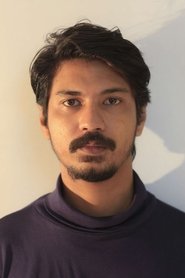
Live from Dhaka, his 2016 debut, won Best Director at the Singapore International Film Festival.

Riddhi Sen (b. 1998) is the son of the actors Kaushik Sen and Reshmi Sen and came to film from Kolkata theatre. At nineteen he won the National Film Award for Best Actor for Kaushik Ganguly’s Nagarkirtan, playing Puti, a transgender woman in a relationship with a flute player, and the youngest actor to take that award in India.

Ananya Chatterjee won the National Film Award for Best Actress for Rituparno Ghosh’s Abohomaan, playing an actress who becomes the muse of a married director; the citation praised the exquisite detailing of a complex character through different stages. She worked with Buddhadeb Dasgupta on Aamra, and later with Kamaleswar Mukherjee on Meghe Dhaka Tara and Jaatishwar.

Kamar Ahmad Simon, an architect by training, works in a hybrid documentary register that stages real lives with the rhythm of fiction. Are You Listening! (2012), following a coastal family after Cyclone Aila, won the Grand Prix at Cinéma du Réel in Paris; its sequel Day After… premiered in IDFA’s International Competition in 2021. His work forms a loosely linked Water Trilogy.

Rezwan Shahriar Sumit’s debut The Salt in Our Waters (2020), about a Dhaka sculptor colliding with a climate-stressed fishing community in Patuakhali, premiered at the BFI London Film Festival and swept seven Bangladesh National Film Awards. His second feature Master, set during Bangladesh’s 2024 July uprising, won the VPRO Big Screen Award at Rotterdam in 2026 on a unanimous jury decision.
Sarmistha Maiti and Rajdeep Paul are an Indian directing duo working in Bengali, both graduates of the Satyajit Ray Film and Television Institute. Their feature documentary At the Crossroads (2013), on the Kolkata drummer Nondon Bagchi, received a Special Mention in the non-feature section of the National Film Awards. Their fiction debut Kalkokkho world-premiered in the New Currents competition at Busan in 2021.
Iqbal Hossain Chowdhury is a Toronto-based Bangladeshi-Canadian writer-director whose debut feature Boli (2023) won the New Currents Award at Busan, the festival’s top prize for a first- or second-time Asian director. Set in a remote Chattogram coastal village in the late 1990s, it follows a fisherman determined to unseat the local champion at boli khela, a regional wrestling tradition.
Arghyakamal Mitra is the leading Bengali film editor of the Rituparno Ghosh era, with more than eighty films cut since 1996. He won the National Film Award for Best Editing for Abohomaan, and is unusual in also holding a Bangladesh National Film Award for Best Editing, for Aha!.
Sudipta Chakraborty won the National Film Award for Best Supporting Actress for Rituparno Ghosh’s Bariwali, her performance as the slum-born maidservant Maloti cited for its zest for life. She has since worked with Buddhadeb Dasgupta, Aparna Sen and Atanu Ghosh, building a career largely outside the star system.

Jaya Ahsan is the defining cross-border figure of modern Bengali cinema, working continuously in both Dhaka and Kolkata since her Indian debut in Arindam Sil’s Aborto (2013). She has won Bangladesh’s National Film Award for Best Actress five times, and multiple Filmfare Awards Bangla for her Indian work including Bishorjan and Binisutoy. She also produces.
Avik Mukhopadhyay is an FTII-trained cinematographer and the most decorated living Bengali director of photography, with four National Film Awards for Best Cinematography. He shot most of Rituparno Ghosh’s mature work, including Chokher Bali and Raincoat, and has worked with Mrinal Sen, Aparna Sen and Anik Dutta.
Pradipta Bhattacharyya, born in Berhampore, West Bengal, graduated in film editing from Roopkala Kendro and teaches editing at the Satyajit Ray Film and Television Institute. His debut feature, the surreal mock-documentary Bakita Byaktigato (2013), in which an amateur filmmaker searches for a village where everyone is said to find true love, won the National Film Award for Best Feature Film in Bengali.

Churni Ganguly is a Bengali actress, screenwriter and director. Her directorial debut Nirbashito (2014), about an exiled writer and her cat, won the National Film Award for Best Feature Film in Bengali; her second feature Tarikh (2019) won her the National Film Award for Best Dialogue. As an actress she won the Filmfare Award Bangla for Ardhangini in 2024.
Golden Age

The definitive Ray character actor. His decaying zamindar in Jalsaghar is a landmark of screen acting.

A more commercially accessible counterpart to Ray and Ghatak, who repeatedly adapted Tagore while blending humanism with social conscience.

A gentler, more mainstream-facing contemporary of Ray and Ghatak, with warm rural and family dramas beloved across generations.

A theatre titan alongside Shambhu Mitra and Utpal Dutt whose stagecraft deeply shaped Bengali film acting.

The quiet, expressive face of Ray's Charulata and Ghatak's Subarnarekha, and a defining actress of the golden years.

Discovered by Ray at 15 for Apur Sansar. A rare bridge between Bengali art cinema and mainstream Bollywood stardom.
Parallel Cinema

A child star of Ray's films who became one of India's most consistently acclaimed woman directors, tackling loneliness and social taboo across four decades.
A key figure of Bengal's politically-charged parallel cinema movement.

A prolific writer-director-cinematographer chronicling rural poverty and Bengal's cultural syncretism for decades.

One of the defining commercial leading men of 1980s-90s Bengali cinema before moving into politics.
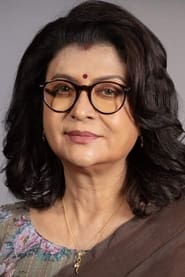
A leading actress of 1980s-90s Bengali cinema whose National Award-winning Unishe April remains one of the era's most celebrated performances.
Bengali Renaissance
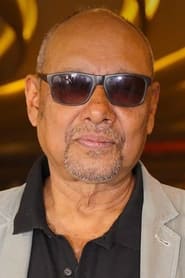
A singer-songwriter turned filmmaker who became a key voice of urban, middle-class Bengali identity and revived the Byomkesh Bakshi franchise.

One of contemporary Bengali cinema's most prolific, socially conscious directors: from sound design to trans identity, all acclaimed.
Contemporary Tollywood

A former ad-industry veteran whose satirical debut Bhooter Bhabishyat became a cultural phenomenon.

Bengali cinema's most enduring commercial leading man since the 1980s, who reinvented himself in the 2000s through Rituparno Ghosh's art-house films.

Blends big-budget commercial spectacle with serious biographical filmmaking, a rare bridge between art and mass cinema.

One of the definitive leading actresses of Bengali cinema's late-90s/2000s art-house revival, closely tied to Rituparno Ghosh and Aparna Sen.

The most commercially dominant art-to-mainstream crossover director of the 2010s: literary biopics, thrillers, true crime.

Alongside Dev, one of the two biggest commercial box-office draws of his generation.

Built her own distinct career as a critically acclaimed actress-turned-director spanning Bengali, Hindi and English cinema.

A versatile actress moving fluidly between commercial Bengali cinema, art films, and pan-Indian streaming across a 20+ year career.

Best known internationally for Chatrak, one of the few Bengali-set films of the 2010s to screen at Cannes.

A thoughtful actor-director who crossed from Bengali art cinema into mainstream Hindi cinema while continuing to direct in Bengali.

Tollywood's biggest modern box-office draw, with action-adventure blockbusters that rebuilt mainstream cinema's commercial confidence.

One of the most bankable commercial leading ladies of contemporary Tollywood.
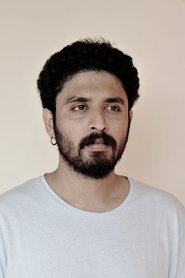
A visual artist-turned-filmmaker whose wordless, atmospheric films make him the most internationally festival-recognized Bengali director of his generation.

Rose to leading-man status with 2012's Idiot and has been a reliable commercial face of mainstream Bengali cinema since.
Warm, family-centered dramas about aging, marriage and social change, and the most reliable box-office draw of the decade.