Ritwik Ghatak's Films in Order, and the 4K Restorations
Eight features, two of them released after his death, and the new restorations that screened in 2026.
Ritwik Ghatak's films come to eight completed features, and the best place to start is Meghe Dhaka Tara (1960). In order they run from Nagarik, made in 1952, to Jukti Takko Aar Gappo, made in 1974, and two of them reached audiences only after he died.
Ghatak was born in Dhaka on 4 November 1925 and died in Calcutta on 6 February 1976, at fifty. He came to film from the theatre, through the Indian People's Theatre Association, and spent a year in 1966 to 1967 teaching at the Film and Television Institute of India in Pune. The films he left are few, uneven in the way of films made with little money, and unlike anyone else's. His centenary in 2025 set off a restoration of his work that was finished and screened in 2026, which makes this a good moment to watch them.
Ritwik Ghatak's films in order
The dates below give the year each film was made and, where it differs, the year it was released.
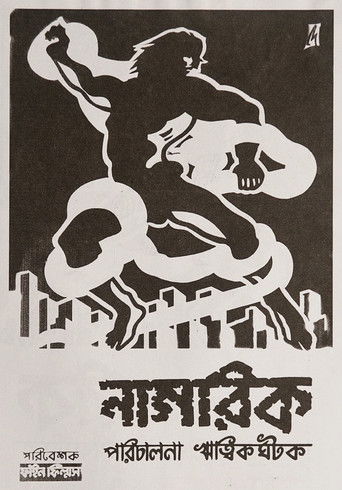
Nagarik (made 1952, released 1977). His first feature follows Ramu, a young man looking for work in Calcutta while his family slides into poverty. It was never distributed on completion and was long thought lost. After Ghatak's death its negative was found in a Calcutta laboratory, and it was released on 20 September 1977.
Ajantrik (1958). A taxi driver named Bimal, played by Kali Banerjee, and his battered 1920 Chevrolet, which he calls Jagaddal. Wikipedia describes it as one of the earliest Indian films to treat an inanimate object, here a car, as a character. It is the warmest of his films and the easiest way in after Meghe Dhaka Tara.
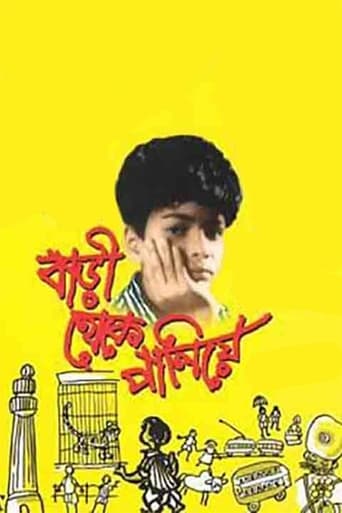
Bari Theke Paliye (1958). A boy runs away from his village to Calcutta. Some sources date it 1959; Wikipedia and the Il Cinema Ritrovato programme give 1958.
Meghe Dhaka Tara (1960). Adapted from a novel by Shaktipada Rajguru. Supriya Choudhury plays Nita, the eldest daughter of a refugee family from East Bengal, who works to keep everyone else afloat until there is nothing left of her. Its closing cry, "Dada, ami banchte chai" (Brother, I want to live), is among the most quoted lines in Bengali cinema.
Komal Gandhar (1961). Set among the theatre groups of post-Partition Bengal and drawn from the split in the Indian People's Theatre Association that Ghatak lived through. It opens on a stage performance. Senses of Cinema records that it failed at the box office and that the failure hit him hard.
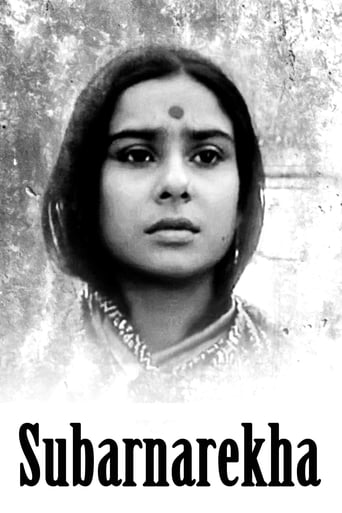
Subarnarekha (made 1962, released 1965). Set in a refugee colony, Nabajeeban, on the edge of Calcutta in the 1950s, and following the lives that grow out of it. It was produced in 1962 and premiered on 1 October 1965.
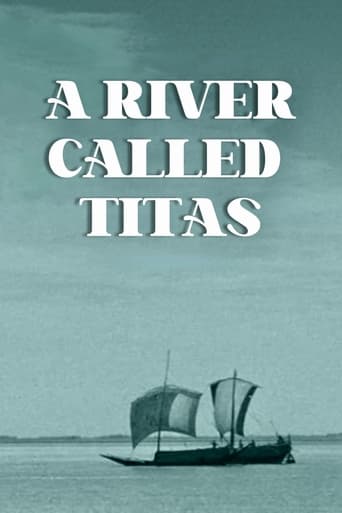
Titas Ekti Nadir Naam (1973). The title means A River Called Titas. It is the one feature not in the 2026 restoration: it was restored in 2010 by The Film Foundation's World Cinema Project and the Cineteca di Bologna at L'Immagine Ritrovata.
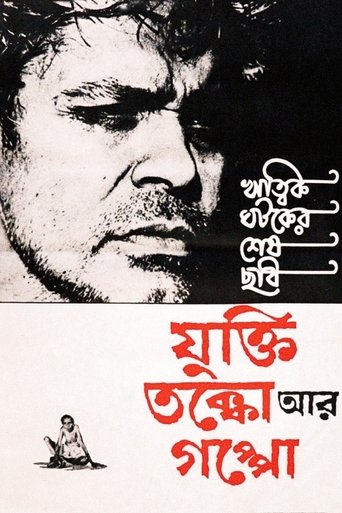
Jukti Takko Aar Gappo (made 1974, released 1977). His last feature, in which Ghatak himself plays the lead, a drinking, argumentative intellectual adrift in a Bengal he no longer recognises. It is the closest thing he made to a self-portrait. It was released on 30 September 1977, more than a year and a half after his death.
He also left several features unfinished, among them Bedeni, Kato Ajanare and Bagalar Banga Darshan, and made a number of documentaries and short films.
The Partition trilogy
Meghe Dhaka Tara, Komal Gandhar and Subarnarekha are usually grouped as his Partition trilogy. They were not planned as a series, and they do not share characters. What they share is their subject: people pushed out of East Bengal by the 1947 Partition, and what becomes of them, their families and their idea of home in the years that follow. Senses of Cinema describes the three as his films about the social and economic aftermath of Partition.
If you watch only three Ghatak films, watch these, in this order. Meghe Dhaka Tara is the most direct and the most shattering. Komal Gandhar is the most personal and the hardest to follow if you do not know the theatre politics behind it. Subarnarekha is the widest in scope and, for many viewers, the most punishing. Ghatak once said of a scene in it that when the camera halts at the dead end of a railway track, it "raises a searing scream". That is a fair description of how his films work: not quietly, and not by accident.
The 4K restorations
For his birth centenary, NFDC and the National Film Archive of India carried out the digital preservation of Ghatak's filmography under the National Film Heritage Mission, run by the Union Ministry of Information and Broadcasting. Prints and negatives came from the National Film Archive in Pune and the West Bengal State Film Archive in Kolkata. The cinematographer Avik Mukhopadhyay supervised the colour grading.
The festival Il Cinema Ritrovato in Bologna gave the restorations a section of their own in June 2026, curated by Sanghita Sen and Shivendra Singh Dungarpur, under the title Soil of Bengal, Water of Bengal: The Cinema of Ritwik Ghatak. The festival's credits state that seven of the eight features were restored in 4K in 2026: Nagarik, Ajantrik, Bari Theke Paliye, Meghe Dhaka Tara, Komal Gandhar, Subarnarekha and Jukti Takko Aar Gappo. The eighth, Titas Ekti Nadir Naam, screened from its 2010 restoration.
Scroll, reporting on the project in June 2026, wrote that the restoration covers his eight features along with short films, documentaries and unfinished projects, and that the features had recently screened at the British Film Institute in London before travelling to Bologna. It quoted Prakash Magdum, managing director of NFDC: "The idea is to make this cinema accessible."
The restorations had begun reaching audiences in India before that. The Federal reported that digitally preserved versions of Meghe Dhaka Tara, Komal Gandhar and Subarnarekha were shown at the Kolkata International Film Festival in November 2025.
What the restorations do not yet mean is that every film is easy to stream in its new form. The festival screenings came first. Which versions reach streaming services, and when, is a separate question, and any listing you find is worth checking against the running time and picture before you settle in.
Where to watch Ritwik Ghatak's films
As of September 2026, JustWatch India lists Meghe Dhaka Tara (1960) on Hoichoi by subscription, and on the Hoichoi channel inside Amazon Prime Video. Take care to pick the 1960 Ghatak film: a 2013 film shares the title.
For the other seven, availability shifts often enough that a list here would date quickly. Each film's page on Cholochitro Diary carries dated streaming links, and it is the quickest way to see where a Ghatak film is showing now.
Where to start, in short
Begin with Meghe Dhaka Tara. Then Subarnarekha and Komal Gandhar to finish the trilogy. Then Ajantrik, for a Ghatak who can be funny and tender, and Jukti Takko Aar Gappo last, when you know enough of the rest to recognise the man playing himself in it. Nagarik and Bari Theke Paliye fill in the picture, and Titas Ekti Nadir Naam, restored in 2010 and shown again at Bologna in June 2026, is worth seeking out on its own terms once the others have done their work.