Bengali Films Set During Durga Puja
From Feluda in Varanasi to a family reckoning after Bijoya, films where Pujo is the story
Bengali films set during Durga Puja run from Satyajit Ray's Joi Baba Felunath (1979) to Rituparno Ghosh's Hirer Angti and Utsab, and on to recent family films like Ekannoborti and Bijoyar Pore. What they share is an understanding of what Pujo does to a household: it brings everyone home, fills the rooms, and gives old quarrels a stage.
This list covers films where Durga Puja is the setting or the engine of the story, not just a song sequence. For each one there is a line on how the festival figures, so you can pick the kind of Pujo you want: a mystery, a family reunion, a comedy, or something harder.
A mystery in Varanasi
Joi Baba Felunath (1979), directed by Satyajit Ray. The Feluda film set during Durga Puja. Feluda (Soumitra Chatterjee), Topshe and Jatayu (Santosh Dutta) go to Varanasi for the Puja holidays and are pulled into the theft of a small golden Ganesh belonging to the Ghosal family. The festival is part of the plot, not decoration: the family's idol is being made in the house, the stolen Ganesh turns out to have been hidden inside the lion of the Durga idol, and the old idol maker who notices is killed before he can say so. Utpal Dutt plays Maganlal Meghraj, and this is the second and last Feluda film Ray directed, five years after Sonar Kella first brought Jatayu to the screen. If you watch one film this Pujo, it could well be this one.
The family home, opened up for the festival
Hirer Angti (1992), directed by Rituparno Ghosh. Ghosh's first film, from a story by Shirshendu Mukhopadhyay. A stranger called Gandharva Kumar arrives at Ratanlal Babu's house during the family's Durga Puja, entertains the grandchildren with magic tricks, and then claims to be the rightful heir to the property. The festive household is exactly what he disrupts, and the question of who he really is carries the film to its end. It is the gentlest film here.
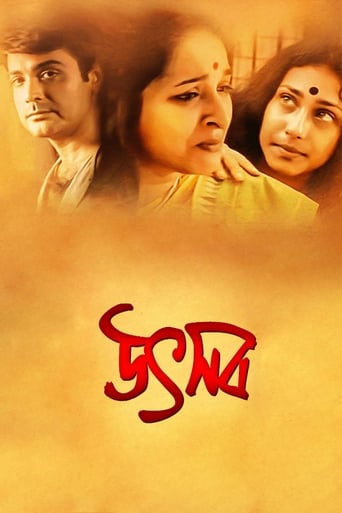
Utsab (2000), directed by Rituparno Ghosh. The film most people mean when they ask what Utsab is about. A Bengali family gathers at its ancestral house for Durga Puja, and under the festive surface everything is coming loose: a buyer wants the house, and several of the children are in money trouble. Madhabi Mukherjee plays Bhagabati, the matriarch, with Mamata Shankar, Rituparna Sengupta, Prosenjit Chatterjee, Pradip Mukherjee and Deepankar De. Wikipedia's summary puts it well: the film follows "the various emotional currents passing among family and relatives underneath the supposedly festive occasion of Durga Puja". Ghosh won the National Film Award for Best Director for it. Utsab is the quietest and truest Pujo film on this list.
Ekannoborti (2021), directed by Mainak Bhaumik. The title means a joint family, and the film is about one gathering for its annual Durga Pujo. The Banerjee house, once empty and silent, fills with relatives and festive chaos. The cast includes Sauraseni Maitra, Ananya Sen, Aparajita Adhya, Alokananda Roy, Kaushik Sen and Biswanath Basu.
Bijoyar Pore (released 2024), directed by Abhijit Sreedas. The title means "after Bijoya", and the film begins where the others end, when the pandals come down and the family is left with itself. An estranged daughter comes home, a tragedy follows, and a mother, Alokananda, holds the family together as it faces grief it has put off for years. Mamata Shankar and Deepankar De lead a cast that includes Swastika Mukherjee and Mir Afsar Ali. It is the one to watch on Dashami evening.
A landlord's idol
Antarmahal (2005), directed by Rituparno Ghosh. Set in late nineteenth-century Bengal and drawn from Tarasankar Bandyopadhyay's story Pratima, this is the darkest film here. A landlord (Jackie Shroff) who wants the British title of Raibahadur decides to put Queen Victoria's face on the body of the goddess Durga, whose clay idol his household has made every year for the Puja. Abhishek Bachchan plays the young sculptor, and Roopa Ganguly and Soha Ali Khan play the landlord's two wives. It is a film about power, and the Durga idol is where that power is made visible.
The festival as a story in its own right
Durga Sohay (2017), directed by Arindam Sil. Set in a wealthy jewellers' family in north Kolkata in the days between Mahalaya and Bijoya Dashami. A woman called Durga (Sohini Sarkar) enters the house under false pretences, is caught, and is given a second chance by the younger daughter-in-law. The household comes to trust her, while a plan is made to rob the house on Dashami. The festival calendar is the film's clock.
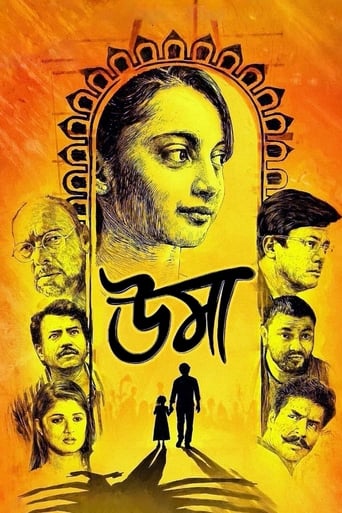
Uma (2018), directed by Srijit Mukherji. A terminally ill girl living in Zurich wants to see Kolkata's Durga Puja, and her father (Jisshu Sengupta) arranges a Puja out of season so that she can. The story is drawn from the real experience of Evan Leversage, a child from St George, Ontario, in Canada. Sara Sengupta plays Uma, with Anjan Dutt and Anirban Bhattacharya. One character calls the staged festival a mockery; the film's answer is its final Visarjan.
Asur (2020), directed by Pavel Bhattacharjee. An artist, Kigan (Jeet), sets out to build the world's largest Durga idol at Deshbandhu Park in south Kolkata, and wounded pride among the people around him threatens the project. Abir Chatterjee and Nusrat Jahan co-star. It is a film about the people who make Pujo happen rather than the people who visit it.
Pujo films rarely open at Pujo
One small surprise in putting this list together: very few of these films were released during the festival they are about. Joi Baba Felunath, adapted from Ray's own Feluda novel of 1975, opened on 5 January 1979. Utsab reached cinemas in March 2000. Durga Sohay opened at the end of April 2017, Uma in June 2018, Asur in the first week of January 2020, Ekannoborti in November 2021 and Bijoyar Pore in January 2024. Whatever the reasons in each case, they tend to arrive when the festival is a memory, and that suits them.
It also means these films are made to be remembered rather than lived through. Utsab and Bijoyar Pore in particular look back on a Pujo from a little distance, the way a family does in the weeks after. That is part of why they hold up when watched out of season, and part of why they hit hardest when watched in it.
What to watch during Pujo
For the days themselves, choose by mood. On Shashthi or Saptami, when the house fills up, watch Utsab or Ekannoborti. On Ashtami, with the whole family, Hirer Angti or Joi Baba Felunath. On Navami night, if you want something to argue about, Antarmahal or Asur. On Dashami, Bijoyar Pore, and Uma if you are ready to cry.
A note on what is not here. Satyajit Ray's Devi (1960) is about a young woman declared to be an incarnation of a goddess, but the goddess in that film is Kali, not Durga, so it is not on this list.
Where to watch
Streaming rights for Bengali films change often, and older titles move between services. Each film's page on Cholochitro Diary lists dated streaming links, which is the best place to check before you settle on one.