Uttam Kumar at 100: Where to Start With the Mahanayak's Films
A starting path through his films by mood, for the centenary year.
If you are new to Uttam Kumar, start with Nayak (1966), Satyajit Ray's film about a matinee idol on an overnight train, and then follow whichever mood it leaves you in. Uttam Kumar's best films fall into a few clear groups: the romances with Suchitra Sen, the two films with Ray, the detectives and costume adventures, and the harder, older roles of his last decade.
This is a starting path, not a complete filmography. Wikipedia counts roughly two hundred films in his career, and a newcomer does not need most of them. What follows is one film per line, with the reason to watch it, and a note at the end on how Kolkata marked his hundredth birthday this month.
Who he was, briefly
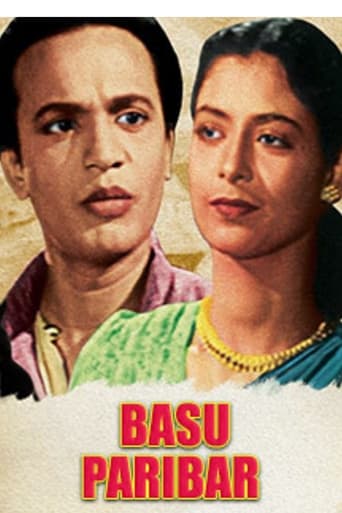
Uttam Kumar was born Arun Kumar Chattopadhyay in Calcutta on 3 September 1926, and died there on 24 July 1980, aged 53. His first film was Drishtidan (1948), directed by Nitin Bose, in which he was credited as Arun Kumar Chatterjee in a supporting part. The early years were hard: Wikipedia records that his films failed so often that he was mocked as a flop master. The turn came with Nirmal Dey's Basu Paribar (1952), and then, the following year, with the first film he made opposite Suchitra Sen.
He came to be called Mahanayak, the great hero. Accounts differ on who first used the word. Wikipedia credits the film magazine Ultorath in 1959, after a run of hits, but we have not found a primary source to confirm it, and the title had plainly stuck by the time he died.
In the awards for 1967, presented in 1968, he became the first actor to win the National Film Award for Best Actor, then called the Bharat Award, for two films in the same year: Antony Firingee and Chiriakhana.
Start here
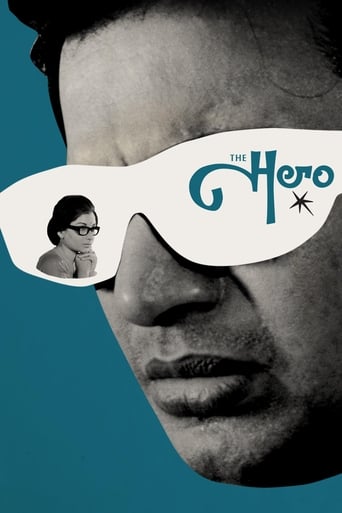
Nayak (1966). Written and directed by Satyajit Ray. Uttam Kumar plays Arindam Mukherjee, a Bengali film star taking the night train from Calcutta to Delhi to collect a national award, who finds himself confessing his regrets to a young magazine editor, played by Sharmila Tagore. It is a film about stardom made with the biggest star of the day, and he plays it with no vanity at all. It won the Special Jury Award at the Berlin International Film Festival.
If you want the romances
These are the films that made Uttam Kumar and Suchitra Sen the most loved pair in Bengali cinema. Our guide to every film they made together goes through all of them in order; these are the ones to see first.
Sharey Chuattor (1953). Directed by Nirmal Dey. A comedy set in the Annapurna Boarding House, and the first film the two made together. Satyajit Ray counted it among the best comedies of the Bengali talkie era.
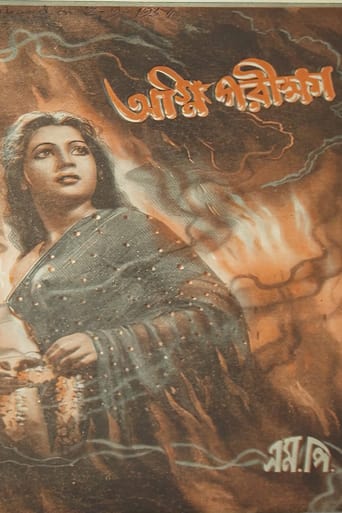
Agni Pariksha (1954). Directed by the collective Agradoot, from Ashapurna Devi's novel. The film that made them a pair in the audience's mind, and a hit that set the pattern for the decade.
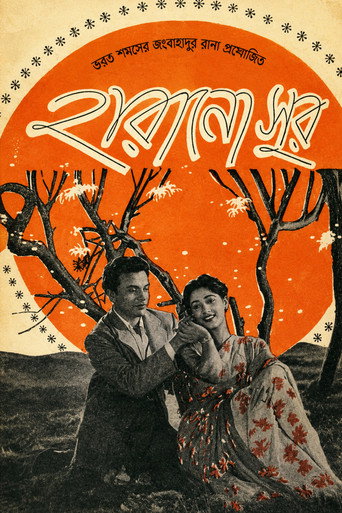
Harano Sur (1957). Directed by Ajoy Kar, adapted from the 1942 Hollywood film Random Harvest. A businessman loses his memory in a train accident, marries the doctor who cares for him, and then, after a second accident, forgets her. Uttam Kumar also produced it, and it was the highest-grossing Bengali film of 1957.
Saptapadi (1961). Directed by Ajoy Kar, from Tarashankar Bandyopadhyay's novel. A Bengali Hindu medical student and an Anglo-Indian Christian woman in 1940s Calcutta, and the families who keep them apart. The motorcycle song, Ei Poth Jodi Na Shesh Hoy, is the most famous sequence either star ever filmed.
If you want Satyajit Ray
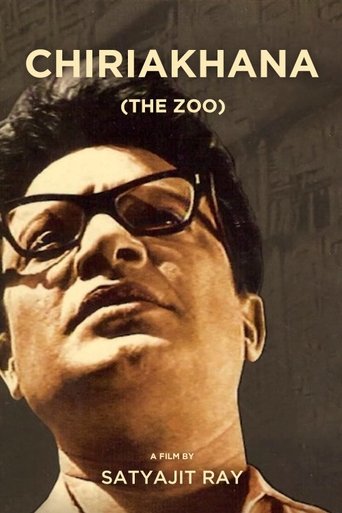
Nayak (1966), above, and Chiriakhana (1967). In Chiriakhana, adapted from a Sharadindu Bandyopadhyay story, he plays the detective Byomkesh Bakshi. Ray won the National Award for Best Direction for it, and it was one of the two films for which Uttam Kumar won Best Actor. It was not greatly admired at first and has grown a following since.
If you want detectives and adventure
Chiriakhana (1967) again, for Byomkesh. Our guide to Byomkesh Bakshi on screen, in order, places it among the many later versions.
Jhinder Bandi (1961). Directed by Tapan Sinha, from Sharadindu Bandyopadhyay's novel after The Prisoner of Zenda. A costume adventure, and the first film in which he appeared with Soumitra Chatterjee, who plays the villain.
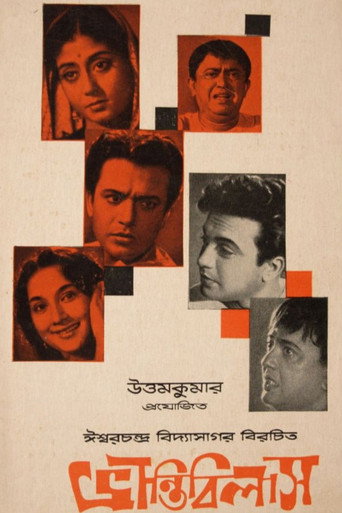
Bhranti Bilas (1963). Directed by Manu Sen, from Ishwar Chandra Vidyasagar's Bengali version of The Comedy of Errors. He plays a double role opposite Bhanu Bandopadhyay. Not a detective film, but the right choice if you want him light.
If you want to see the actor, not the star
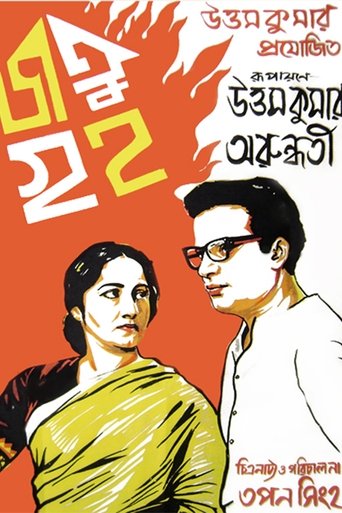
Jatugriha (1964). Directed by Tapan Sinha, from Subodh Ghosh's novel, with Arundhati Devi. A separated couple, Shatadal and Madhuri, meet again by chance at a railway station. It did poorly on release and is now among his most respected films; Gulzar later remade the story in Hindi as Ijaazat (1987). He produced this one too.
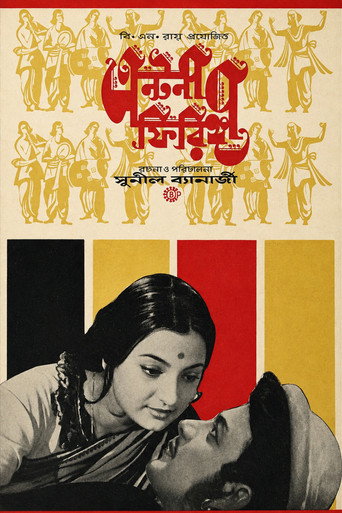
Antony Firingee (1967). Directed by Sunil Bandyopadhyay. He plays Hensman Anthony, a poet of Portuguese descent who became a celebrated Bengali composer of devotional songs and a star of the kobigan, the sung verse duels of nineteenth-century Calcutta. The other half of his first National Award.
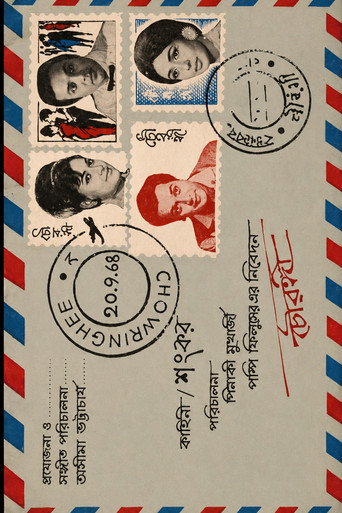
Chowringhee (1968). Directed by Pinaki Bhushan Mukherjee, from Sankar's novel set in a grand Calcutta hotel, the Shahjahan. He plays Sata Bose, the receptionist who keeps every guest's secrets.
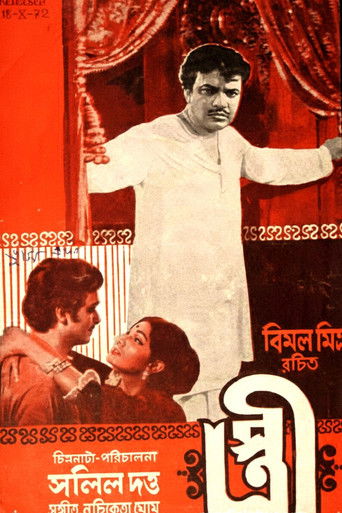
Stree (1972). Directed by Salil Dutta, with Soumitra Chatterjee. He plays a zamindar, Madhab Dutta, and the film lets him be cruel.
If you want his later roles
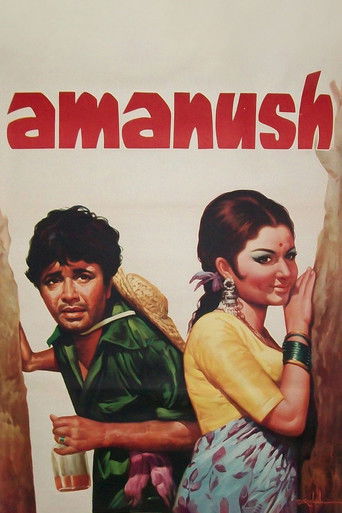
Amanush. Directed by Shakti Samanta and shot in Bengali and Hindi at once, from Shaktipada Rajguru's novel, with Sharmila Tagore. The Bengali version was released in October 1974 and the Hindi one in March 1975. It is the best way to see him through the eyes of a national audience.
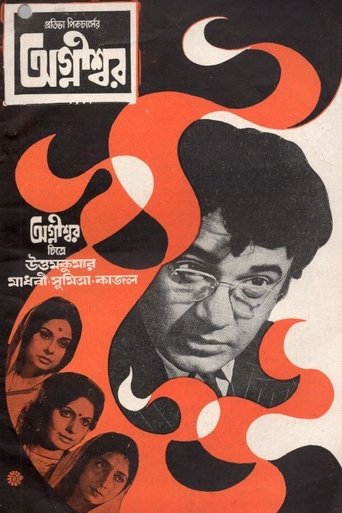
Agnishwar (1975). Directed by Arabinda Mukhopadhyay, from a novel by Banaphool. He plays Dr. Agnishwar Mukherjee, a doctor who will not bend his ethics to anyone.
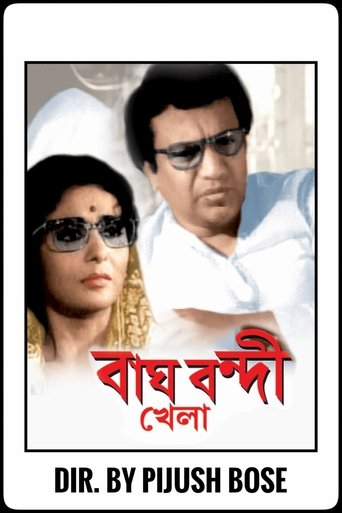
Bagh Bondi Khela (1975). Directed by Pijush Bose, from a novel by Prafulla Roy, with Supriya Devi. He plays a corrupt businessman, and plays against everything the Mahanayak title suggests.
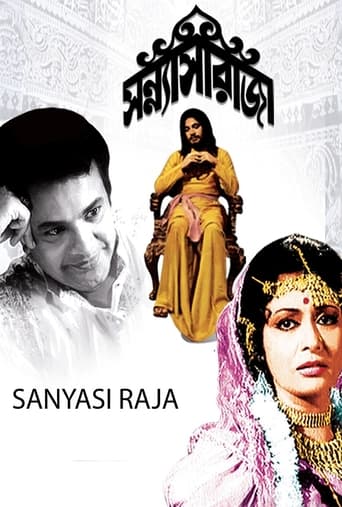
Sanyasi Raja (1975). Directed by Pijush Bose, drawn from the Bhawal case. A zamindar presumed dead at the burning ghat returns to claim his estate from the family friend who has taken it.
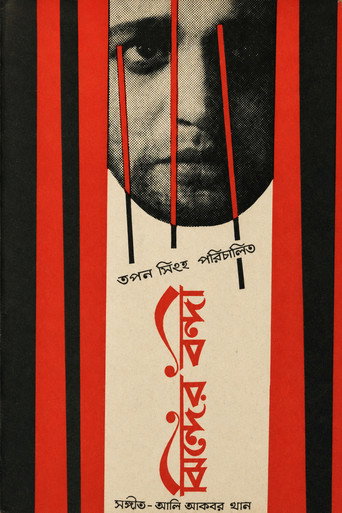
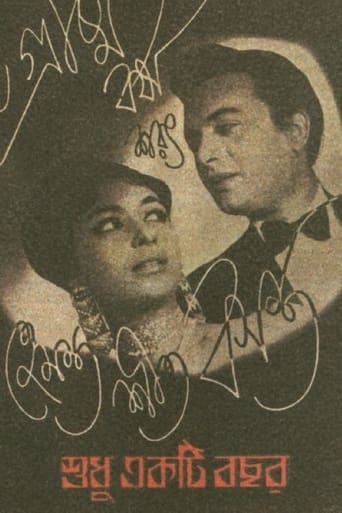
He also directed films himself, among them Shudhu Ekti Bachhar (1966) and Bon Palashir Padabali (1973).
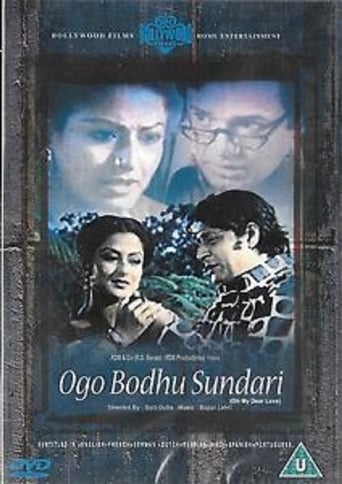
His last film was Ogo Bodhu Shundori, directed by Salil Dutta and adapted from Pygmalion. He fell ill on the set on 23 July 1980 and died the next evening. The film was released on 6 February 1981.
The centenary
His hundredth birthday fell on 3 September 2026. The West Bengal government marked it with four days of events in Kolkata, from 3 to 6 September, opened with a film festival at the Nandan film centre on the evening of 3 September and announced as the start of a year of screenings across the state. An exhibition at Nandan showed stills and memorabilia. The Times of India reported that the four days included the release of a commemorative stamp and special cover, celluloid screenings of Harano Sur and Nayak at Radha Studio, and a closing programme at Rabindra Sadan on 6 September. The Union government separately notified a hundred-rupee commemorative silver coin on 3 September.
Anniversaries tend to produce lists of greatest hits. The better use of this one is to watch a single film you have not seen. If you have seen Nayak, try Jatugriha. If you have seen Saptapadi, try Bagh Bondi Khela.
Where to watch
As of September 2026, JustWatch India lists no streaming service for Nayak, which says more about the aggregators than the film: the Bengali platforms that carry the most classic titles are not all tracked. Each film's page on Cholochitro Diary carries dated streaming links, and it is the quickest way to see where a film is showing now.